Rome Guides · Outside the Walls · Updated June 2026
Exploring the Appian Way & Roman Catacombs by Golf Cart
The ancient road most visitors never reach — and the easiest way to see all of it.
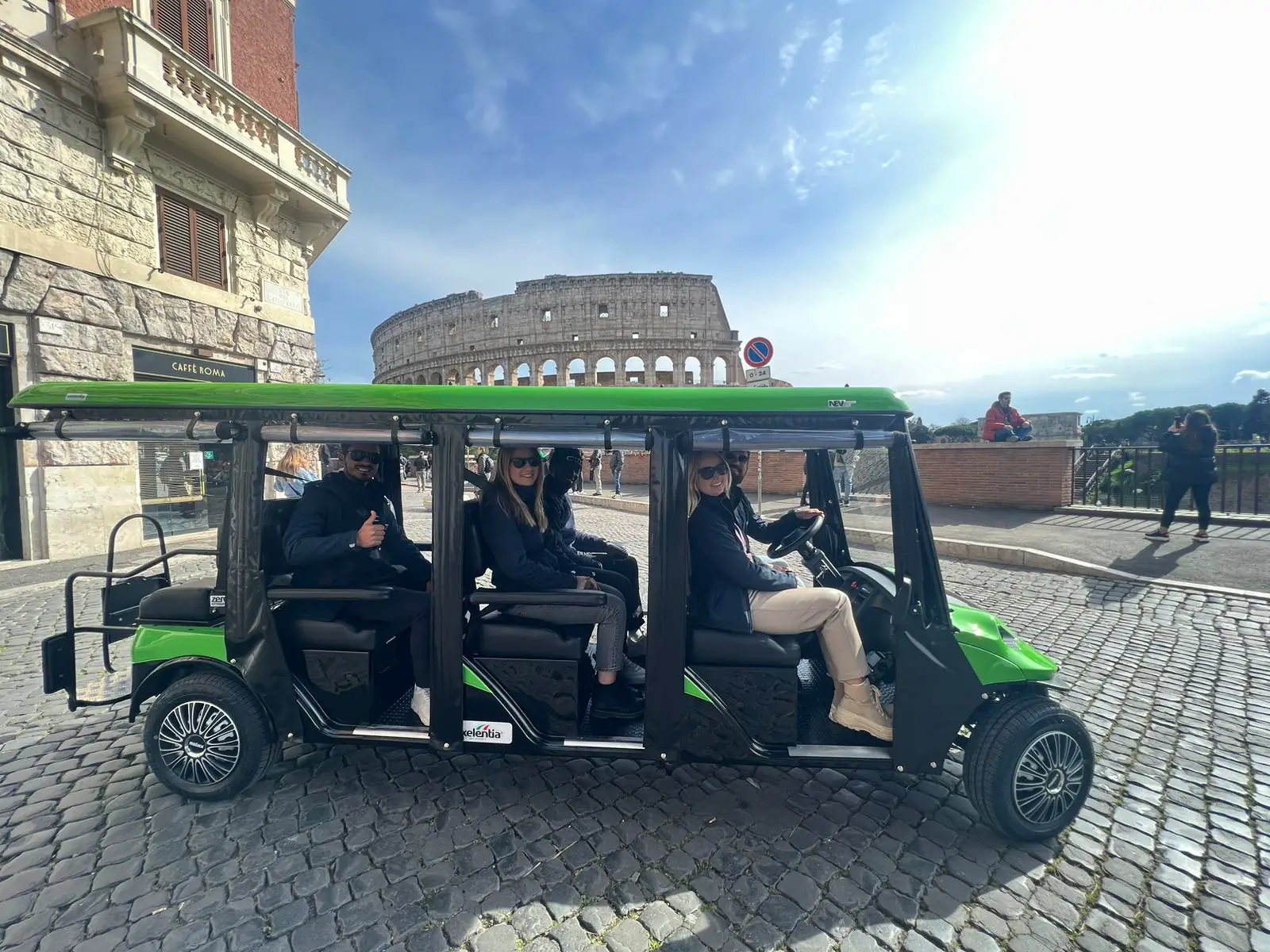
A golf cart turns the spread-out Appian Way into a relaxed half-day loop.
Most people spend their entire Rome trip inside the historic centre, shuffling between the Colosseum, the Trevi Fountain and the Pantheon. They never make it to the one place that feels like real ancient Rome: the Appian Way, the 2,300-year-old road where Roman legions marched, lined with crumbling tombs, umbrella pines, and the entrances to the city's great catacombs.
Check live availability and prices for this tour on GetYourGuide. Pоwered by GetYourGuide.
There's a reason it gets skipped. The Appian Way is long, the cobblestones are brutal on foot, and the catacombs are spread miles apart along a road with patchy public transport. This is exactly the kind of place a golf cart tour was made for — and below we'll walk you through what's out there, how to see it, and why a cart turns an exhausting half-day into the best few hours of your trip.
What is the Appian Way?
The Appian Way (Via Appia Antica) was begun in 312 BC and became ancient Rome's most important highway — the "Queen of Roads." Because Roman law forbade burials inside the city walls, the wealthy built their tombs along it, and early Christians dug vast underground burial networks — the catacombs — into the soft volcanic rock beneath.
Walk it today and you're on the original basalt paving stones, with ruined mausoleums, grazing fields, and aqueduct arches on either side. Large stretches are now a protected regional park, closed or limited to traffic on Sundays, which makes it one of the few places near central Rome that's genuinely peaceful.
Keep exploring
Other Rome experiences you might enjoy
Hand-picked Rome tours and activities, updated live from GetYourGuide.
The Roman Catacombs: what's down there
The catacombs are kilometres of narrow tunnels stacked with burial niches, dug between the 2nd and 5th centuries. You can only enter on a guided visit (they're working religious sites and easy to get lost in), and photography underground is generally not allowed. The three main complexes open to visitors sit along or just off the Appian Way:
Catacombs of San Callisto — the largest and most famous, the official burial place of early popes. Sprawling and atmospheric.
Catacombs of San Sebastiano — built around an early Christian shrine, with beautifully preserved stucco and graffiti from ancient pilgrims.
Catacombs of Domitilla — among the oldest, entered through a sunken 4th-century basilica, and usually the quietest of the three.
A typical underground tour lasts 30–45 minutes and is led by a multilingual guide. The air is cool and damp year-round, so bring a light layer even in summer.
Other highlights along the road
The catacombs are the headline, but the Appian Way is dotted with sites worth stopping for:
Tomb of Cecilia Metella — a massive, perfectly preserved 1st-century BC drum tomb, the road's most recognisable landmark.
Circus of Maxentius — a remarkably intact Roman chariot-racing track, far less crowded than anything in the centre.
Villa dei Quintili — the grand country estate of a senatorial family, with thermal baths and sweeping ruins.
The original basalt paving — long stretches of the genuine ancient surface, worn into ruts by centuries of cartwheels.
Why a golf cart is the best way to see it
This is the practical bit, and it's the reason the Appian Way fits a golf cart so perfectly:
The distances are deceptive. The key sites are spread across several kilometres. Doing it on foot means hours of walking on jarring cobblestones, often in full sun with little shade between stops. Most visitors run out of energy long before they reach the far end.
Public transport is awkward. Buses to the area are infrequent and don't follow the road's length well, and the nearest Metro stops leave you with a long walk to the interesting parts.
A cart covers the whole road comfortably. You glide between the catacombs, tombs and ruins in minutes instead of half-hours, save your legs for the underground tours, and actually have time to take it all in. Smaller and slower than a car, a cart lets you pause for photos and soak up the scenery — and it reaches the spread-out corners a walking tour simply can't.
You get the quiet version of Rome. With the legwork removed, you have the energy to enjoy a part of the city that feels worlds away from the crowds at the Colosseum. (Short on time and sticking to the centre instead? See how far apart Rome's main landmarks really are.)
Ready to roll down the Queen of Roads? The highest-rated tour in this category combines the Appian Way and the catacombs in one ride — a 30-minute guided catacombs walk plus stops at the Baths of Caracalla and Circus Maximus. Check live dates and prices above.
Practical tips for visiting
Allow half a day. Combining a couple of catacomb visits with the road's main monuments comfortably fills three to four hours.
Book catacomb entry in advance where possible — the three main complexes rotate their closing days, so check which are open before you go.
Wear comfortable shoes even on a cart tour; you'll be on your feet underground and around the ruins.
Bring a light layer for the catacombs and water for the road.
Sundays are special — much of the Appian Way is closed to regular traffic, making it especially calm.
Photography is fine above ground and generally restricted below — your guide will tell you where.
See the Appian Way and Catacombs the easy way
The Appian Way rewards anyone who makes the effort to reach it — but it punishes the unprepared. Skip the sore feet and the bus timetables: a golf cart tour links the catacombs, ancient tombs and timeless countryside into one relaxed, unforgettable loop, with plenty of time to head underground and explore.
Top pick · GetYourGuide
The highest-rated Appian Way & Catacombs golf cart tour
Biga Tours' Appian Way Golf Cart Tour with Roman Catacombs Entry — 540 verified reviews at 4.9★, from $76 per person.
Guided option
Rome: Appian Way Golf Cart Tour with Roman Catacombs Entry
This 2.5-hour ride takes a small group out of the historic centre and down the Via Appia Antica, with a 30-minute guided walk through the Roman Catacombs and photo stops at the Baths of Caracalla and Circus Maximus. The cart handles the long cobblestone stretches between sites so you save your legs for the underground tour — exactly the combination this part of Rome demands.
Golf cart along the 312 BC Appian Way — the "Queen of Roads"
30-minute guided walk inside the Roman Catacombs (entry included)
Photo stops at the Baths of Caracalla and Circus Maximus
Licensed local driver-guide with live commentary
Free cancellation up to 24 hours before
The highest-rated tour in this category at 4.9★ — reviewers single out the guides' storytelling and the rare chance to see the catacombs without the long walk between sites.
Tip: the catacomb complexes rotate their closing days, so an organised tour also takes the guesswork out of which one is open.
Live dates, availability and prices — booked securely on GetYourGuide.
Skip the sore feet and the bus timetables. A golf cart links the catacombs, ancient tombs and timeless countryside of the Appian Way into one relaxed loop — with plenty of time to head underground and explore.
★ 4.9 from 540 verified reviews on the featured tour
From $76 per person · catacombs entry included · free 24-hour cancellation